
Expert Advice
How to Keep Your Marine Battery Performing Reliably
Marine batteries play a critical role in keeping vessels ready for the water, from starting the engine to powering the onboard equipment. They operate in demanding environments where they are exposed to vibration, moisture and temperature changes. Seasonal usage introduces additional challenges due to extended periods of inactivity. Without the right care, these conditions will affect battery performance and reliability, potentially leaving you with a flat battery or an unexpected failure when you need it most.
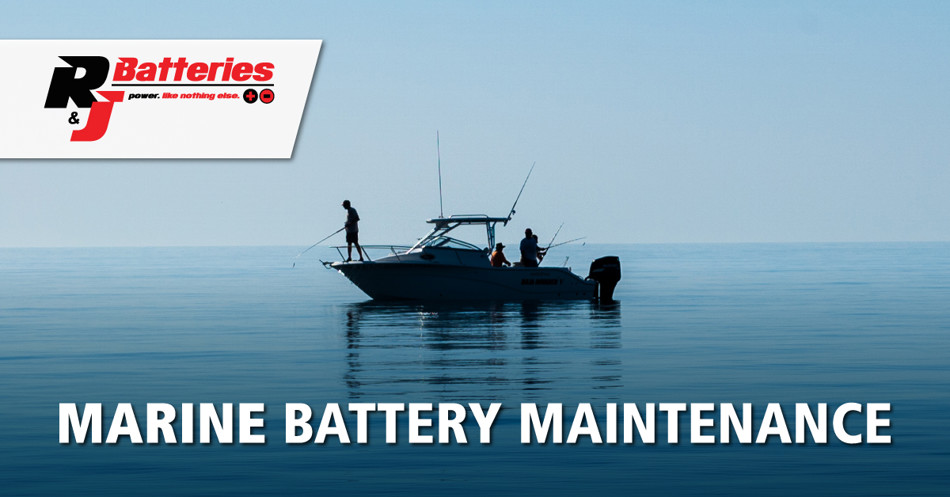
Whether you are preparing for your next boating trip or storing your vessel for the off season, these battery maintenance tips from the experts at R&J Batteries can help keep your battery in tip top condition and ready to go when you are.
Why Choosing the Correct Battery Matters
Choosing a battery which is best suited for the application is critical. Maintenance and charging requirements will vary according to the battery type and technology, so it is important to understand the differences to ensure you select the right battery type.
Marine Battery Types
- Marine Starting: designed to provide a high burst of power to crank an engine. They are the right solution when engine cranking is the primary task.
- Deep Cycle Marine: designed to provide constant power and withstand repeated discharge and recharge cycles. They are commonly used to power electronics, lighting and refrigeration as well as other onboard electronics and accessories.
- Dual Purpose Marine: designed to provide a balance between starting power and cycling capability. They are the right solution when a single battery needs to support both engine starting and provide power for onboard electrical equipment.
Marine Battery Technologies
Flooded Lead Acid
Flooded Lead Acid batteries remain a common option for marine starting and cycling applications however they require appropriate care. These batteries should always be kept upright, ensuring they are never allowed to tip more than 45 degrees from horizontal. It is also important to keep the terminals and connections clean and free from corrosion and inspect the battery regularly for signs of damage or leakage.
When the vessel is not being used, a battery isolator can help prevent unwanted parasitic drain which can discharge a battery and shorten its service life. Battery voltage should be checked regularly unless you have connected a suitable battery maintainer such as the REDMAX HC-12601 Charger & Maintainer which will keep the battery at a high State of Charge and ensure it is always ready to go. If multiple batteries are connected in series (e.g. 24V system), a battery balancer such as the OzCharge[AR1.1] OC-EQ5 can help maintain balance between the batteries.
AGM
Absorbent Glass Mat (AGM) batteries are non-spillable which allows them to be mounted in most orientations. AGM batteries provide superior vibration resistance compared to flooded batteries. Deep cycle AGM batteries can also provide longer cycle life than conventional flooded batteries when correctly used and charged. AGM batteries also have a lower self discharge rate compared to flooded batteries, which can be beneficial when a vessel is not used regularly. A battery isolator will help prevent parasitic drain while the vessel is not in use. Check the battery voltage regularly or use a suitable battery maintainer such as REDMAX HC12601. When batteries are connected in series, a suitable battery balancer like the OzCharge HC-EQ5 will ensure the batteries are always balanced.
Lithium Iron Phosphate
Lithium Iron Phosphate (LiFePO4 or LFP) batteries are becoming increasingly popular for deep cycle marine applications. They offer a significantly higher cycle life compared to flooded and AGM batteries. Most models provide monitoring of battery health and performance via a Bluetooth App.
Lithium batteries have different charging requirements and capabilities compared to traditional lead acid batteries. They do not require float charging in the same way as lead acid batteries; instead they can be charged after use and then disconnected from the charger. Lithium batteries are also able to accept much higher charging currents which shortens turn around time.
How to Maintain a Marine Battery
A regular maintenance routine can help identify potential problems before they lead to an inconvenient breakdown.
Checks to Perform Just before a Boat Trip
For regularly used boats used, check the battery voltage or State of Charge (SoC) before heading out and charge if required. This step is especially important if the boat has been sitting unused for an extended period or if electrical equipment has caused a parasitic drain.
Checks to Perform Monthly
Regular inspections are particularly important for batteries operating in marine environments because of the elevated levels of vibration, moisture and movement. Check the following:
- Ensure battery terminals are clean and secure
- Remove any corrosion around terminals and connections
- Look for loose or damaged wiring
- Replace blown fuses
- Look for cracks or other physical damage (leaking, swelling, etc.)
- Top up water if needed (for accessible flooded batteries)
Seasonal Storage Maintenance
Before placing a boat into storage you should fully charge the batteries. Once charged, isolate the batteries from the vessel to eliminate unnecessary discharge.
During storage, monitor the battery voltage or SoC and recharge the batteries periodically. The correct storage procedure will depend on the battery technology.
Charge the batteries before getting back on the water and check that the batteries and electrical system are operating correctly. You can also bring the batteries to your local R&J Batteries branch for a free test.
The Importance of Keeping the Battery Charged
A battery can become discharged for several reasons. A battery will slowly discharge over time (self discharge) however a failing or faulty charging system may mean the battery is not being charged during operation. Electrical equipment may continue drawing power when the vessel is unattended (parasitic drain), which will accelerate the battery discharge rate. Leaving a lead acid battery at a low State of Charge for a prolonged period of time will cause permanent capacity loss and reduce its service life. A maintenance charger (aka trickle or float charger) is designed to compensate for the self discharge to ensure a battery is kept at a high SoC during storage.
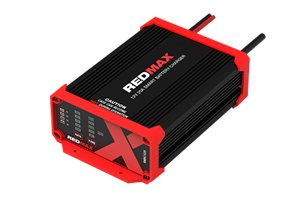
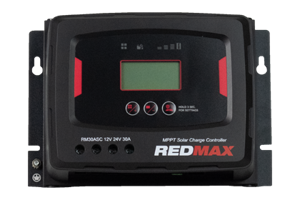
Always use a charger which is compatible with the battery and follow the manufacturer's charging recommendations. A great maintenance charging solution is the REDMAX HC-12601 however if you don’t have access to mains power or the boat is kept outside, the REDMAX RMSBM1210 Solar Battery Maintainer is a great alternative. If you need to charge a battery which has been discharged, the REDMAX RMBC1220 12V Battery Charger is an adjustable smart charger which is capable of charging both lead acid and lithium iron phosphate batteries.
When Is It Time to Replace or Upgrade?
Even with proper maintenance, all batteries will eventually reach the end of their service life. Replacement is recommended when a battery repeatedly loses charge, seems to struggle a little more to crank the engine, has noticeably reduced capacity or shows signs of physical damage.
It may also be worth considering an upgrade if your boating requirements have changed. Adding new or upgraded electrical equipment or spending longer periods on the water will increase your reliance on the battery to power the onboard electrical systems. When this occurs, it may be worth considering a battery upgrade.
For some applications, upgrading to AGM will provide an improvement in cycle life, durability and vibration resistance, and reduced maintenance compared with an accessible flooded battery. For deep cycle applications, lithium technology (LiFePO4 or LFP) will provide a significant increase in cycle life and a reduction in weight.
The best marine battery is affected by the type of vessel, anticipated electrical requirements, available space, the charging system and of course the budget. R&J Batteries offer a great selection of marine batteries and deep cycle solutions to suit most boating applications. If you are unsure whether your marine battery needs replacing or upgrading, speak with a battery expert at your local R&J Batteries branch. The team can help assess your battery requirements as well as provide free battery testing to help determine the condition of your existing battery.
The best marine battery is affected by the type of vessel, anticipated electrical requirements, available space, the charging system and of course the budget. R&J Batteries offer a great selection of marine batteries and deep cycle solutions to suit most boating applications. If you are unsure whether your marine battery needs replacing or upgrading, speak with a battery expert at your local R&J Batteries branch. The team can help assess your battery requirements as well as provide free battery testing to help determine the condition of your existing battery.